A full set of intelligent mattress machinery industry brands
Mattress machines are exported to 150+ countries
Date:2026-08-28
For pillow manufacturers, traditional foam, memory foam, and latex pillows have long formed a stable yet highly homogenized market. Consumer demands for cervical support precision, side-sleeping adaptability, core breathability, rebound responsiveness, and long-term resistance to collapse continue to intensify. Single-material foam or latex structures are increasingly unable to deliver meaningful product differentiation based on physical performance alone. Pocket spring pillows are therefore emerging as a key direction for premium production line upgrades.
At its technical core, the pocket spring pillow incorporates independent pocket springs as one of the key pillow core materials—each spring functions as an independent micro-mechanical unit. Combined with comfort materials such as foam, latex, and fiber layers, the structure creates a hybrid pillow core that delivers a "soft contact interface + elastic mechanical support + multi-point pressure dispersion." For furniture manufacturers, introducing pocket spring pillows is not merely about expanding SKUs; it represents a strategic entry into niche segments including cervical support pillows, dedicated side-sleeping pillows, luxury hotel pillows, smart sleep systems, and personalized custom pillows. A procurement solution with genuine value should be evaluated based on spring outer diameter, wire gauge, effective coil count, spring distribution density, finished pillow height, zoned firmness, airflow structure, and the capacity for OEM/ODM flexible customization tailored to different sleeping postures.
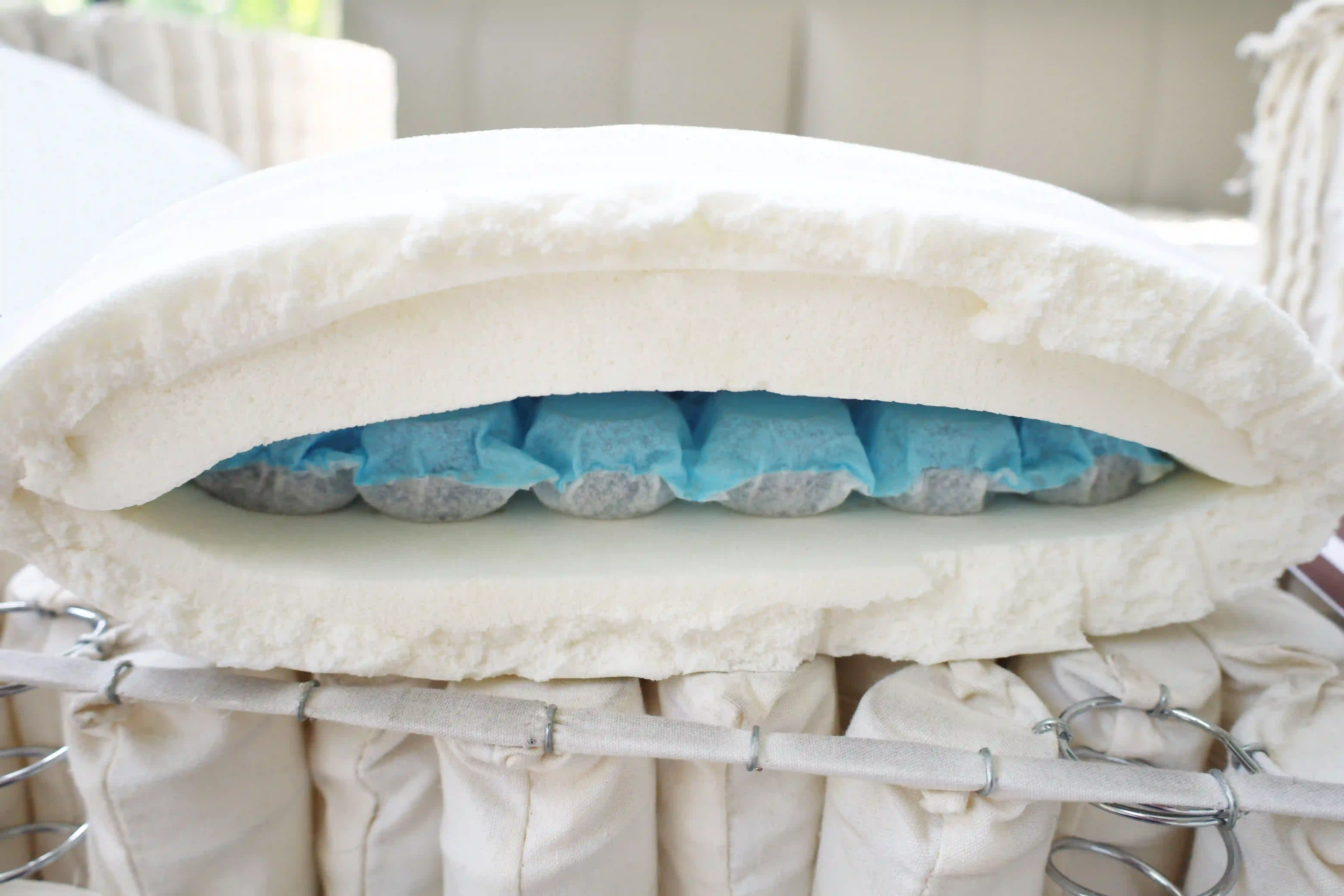
A pocket spring pillow is a functional pillow that uses independent pocket springs as the core mechanical support structure.
Traditional pillows rely on the bulk compression deformation of materials such as memory foam, latex, polyester fiber, or down alternatives. When the head applies pressure, the material layer undergoes continuous displacement. While this provides a soft feel, low-density materials are prone to creep, collapse, or rebound lag under long-term cyclic loading.
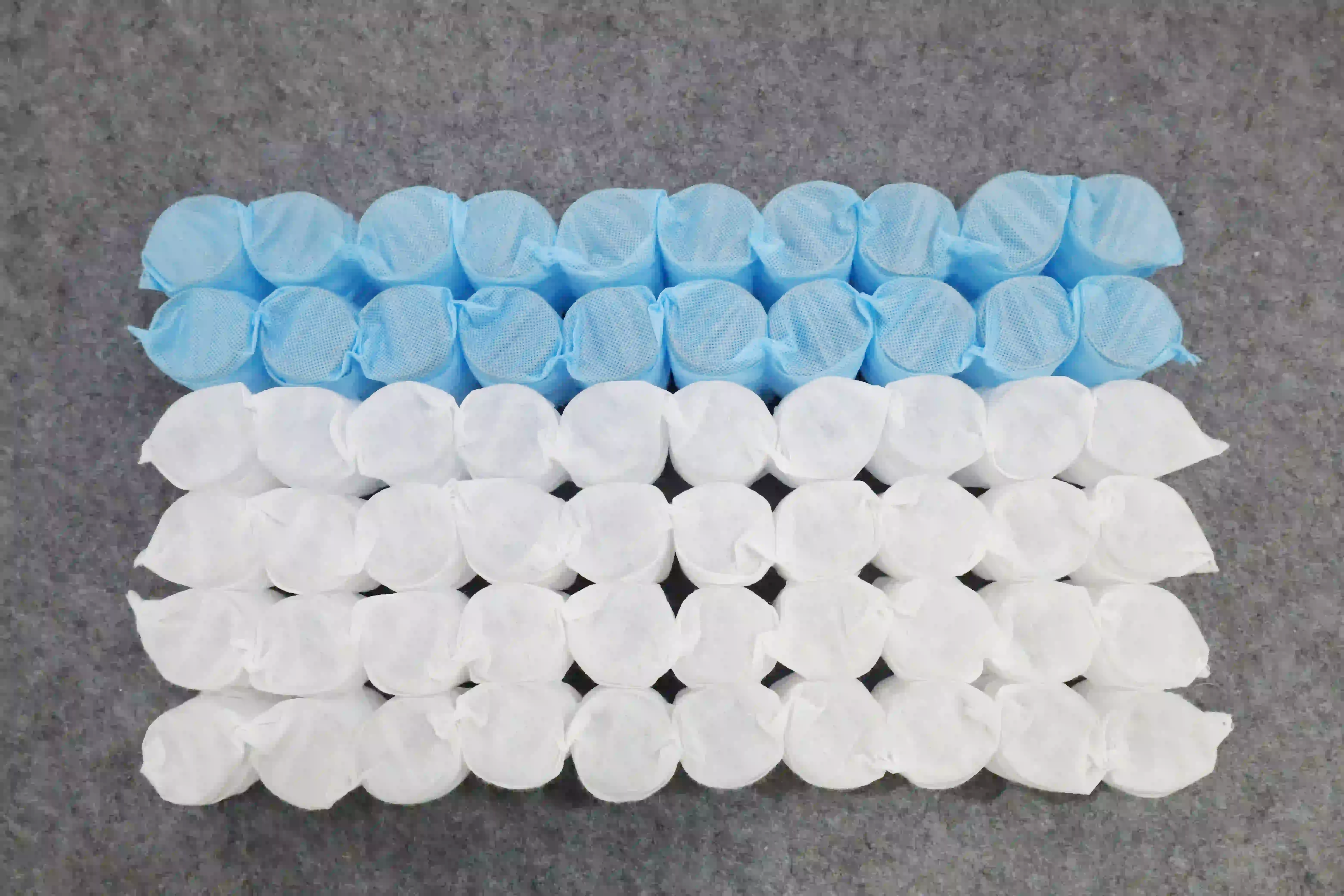
Pocket spring pillows introduce an independent elastic matrix. Each spring is individually enclosed in a non-woven fabric pocket and can compress and rebound differentially according to localized loading. When different areas of the head apply pressure, the corresponding springs deform independently, delivering a more refined localized support experience.
From a manufacturing perspective, the key significance of this spring-based pillow core is clear: the pillow evolves from a "stack of fillings" into a "sleep appliance with a defined mechanical distribution design."
Although pillows and mattresses differ significantly in scale, their load-bearing logic is fundamentally the same: achieving rational support in localized areas, conforming to body contours, while minimizing peak interface pressure.
Mattresses bear the distributed load of shoulders, back, lumbar spine, and hips; pillows focus on supporting the head, cervical spine, and the cervico-shoulder transition zone.
A pillow that is too soft allows the head to sink excessively, especially during side sleeping, potentially leading to cervical lateral bending. A pillow that is too hard creates localized pressure points, compromising comfort and, in severe cases, potentially compressing blood vessels and impeding circulation. Pocket springs feature a dynamic response matrix—compressing under head load and rapidly returning to original height upon pressure release.
Compared with solid foam blocks, pocket spring structures offer clear physical advantages in rebound response speed and sustained support durability, making them ideal for high-end pillow products that demand high resilience, continuous support, and stringent heat dissipation requirements.
From a product development perspective, the two are not substitutes but differ slightly in their support logic.
Memory foam's core advantage lies in its viscoelasticity, forming a cradling sensation through the material's inherent creep characteristics. It conforms to head contours and excels in static pressure dispersion.
Pocket springs, by contrast, emphasize elastic mechanical response—springs compress differentially according to the loaded area while maintaining instantaneous rebound.
The two are highly complementary in actual products. For instance, factories can develop a composite structure comprising: foam/memory foam comfort layer + pocket spring support layer + highly breathable fabric.
This approach preserves the soft conformability of foam while leveraging pocket springs to deliver deep, stable, and fatigue-resistant mechanical support. For premium product lines, this hybrid pillow construction often offers greater distinctiveness and technological premium potential than single-material alternatives.
Side sleepers are a primary target demographic for pocket spring pillows, representing one of the most typical purchasing groups. During side sleeping, a natural height gap exists between the head and the sleeping surface due to shoulder width. The critical factor for a side-sleeping pillow is not simply "softer is better" or "higher is better," but rather adaptive matching between height, firmness, shoulder width, mattress firmness, and individual physical parameters.
Pocket springs enable targeted development through adjustments in wire gauge, height, distribution density, and zoning configurations. Factories can develop dedicated side-sleeping pocket spring pillows by increasing spring height or density in the cervico-shoulder transition zone, while leveraging independent spring characteristics to reduce localized pressure concentration.
When further paired with a pocket spring mattress system, this creates a complete "mattress + pillow" ergonomic sleep system, reinforcing technological consistency across the brand's product portfolio.
A quality pillow should do more than merely support the head—it should assist the head, cervical spine, and thoracic spine in maintaining their natural physiological curvature. This is especially critical during side sleeping, where the pillow must effectively fill the height gap between the head and the sleeping surface created by shoulder width. A height mismatch directly results in the cervical spine assuming a non-neutral lateral bending position.
Therefore, pillow design logic should align with mattress design: the mattress handles trunk support, while the pillow manages head and neck support, working together to maintain a neutral sleep posture.
The distinctive value of pocket spring pillows lies in their capacity to create zoned support with adaptive height characteristics—a stable head support zone in the center, while the cervical and shoulder zones are differentiated in support stiffness through tailored spring specifications. This meets the customization requirements for side-sleeping pillows, back-sleeping pillows, ergonomic pillows, and cervical support pillows.
When procuring or developing pocket spring pillows, it is insufficient to focus solely on unit cost—a comprehensive technical indicator system must be established.
Wire gauge directly determines spring stiffness, rebound force, and fatigue life.
Thinner wire gauges are suitable for creating softer comfort zones; thicker wire gauges are used in areas requiring higher support stiffness. The core procurement objective for spring pillow cores should start from pillow development requirements, identifying the combination of wire gauge and coil count that matches the target sleeping sensation.
Finished pillow height directly determines sleeping posture. If the design spring height is too large, the finished pillow will be overly thick; if too small, the spring's effective stroke is restricted, resulting in inadequate elastic response. In actual design, the spring's free height and pre-compression must be back-calculated from the target finished height, deducting the compression allowance of foam, latex, or fiber layers.
Higher spring count does not necessarily mean better, but higher density generally indicates a finer support grid. For premium pocket spring pillows, increasing spring count distributes head load across more independent springs, reducing localized peak pressure. More support contact points = more refined pressure distribution.
Springs alone cannot constitute a high-end pillow product. A market-competitive pocket spring pillow typically employs a multi-layer composite structure:
Surface comfort material + buffer transition layer + pocket spring support layer + functional fabric.
This structure ensures soft contact while avoiding the "soft but unsupported" deficiency. For luxury hotels, furniture brands, and sleep brands, this composite construction also facilitates OEM/ODM customization.
Traditional memory foam pillows suffer from restricted airflow due to high material density and closed-cell structure. Pocket spring pillows, by contrast, naturally feature numerous interstitial spaces between springs, which can serve as air exchange channels.
For heat-sensitive users, breathability is a critical purchase decision factor. Pillow factories can incorporate 3D Mesh, knitted breathable fabrics, or Air Mesh interlayers to significantly improve airflow efficiency within the pillow core.
For factories newly entering the pocket spring pillow market, procuring finished products or semi-finished cores allows rapid market testing with reduced upfront equipment investment. This approach suits brands, e-commerce sellers, and factories without spring production capabilities.
Lianrou Machinery not only manufactures mattress machinery but also provides customized pocket springs for the global furniture industry. The company has already supplied pocket spring pillow cores for brands including Simmons, DeRUCCI, and Kingkoil, successfully supporting their launch of spring pillow products.
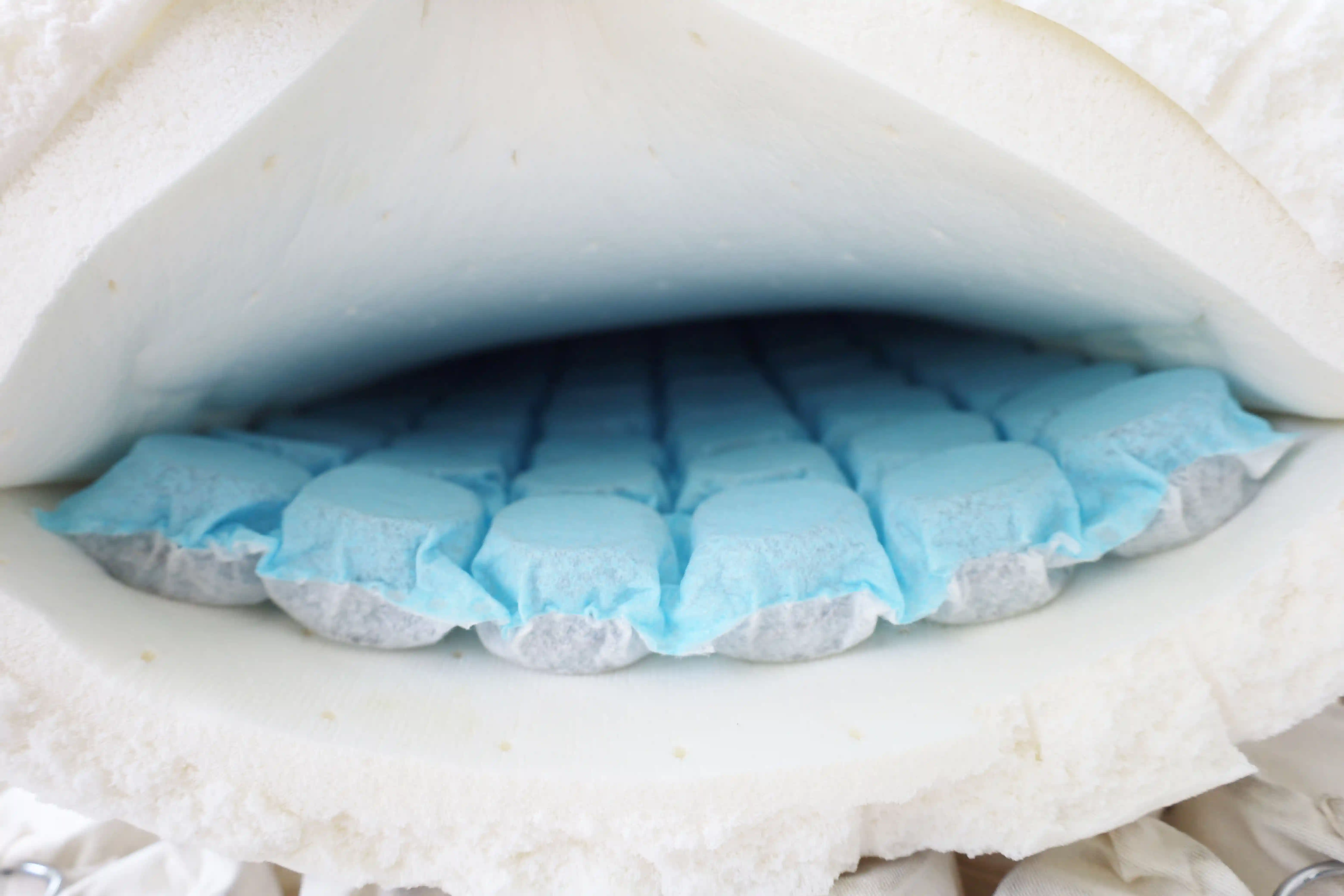
· Box Pocket Spring / Bubble Spring / Micro Spring
Bread springs (or bubble springs) are characterized by fewer coils, high comfort, sensitive rebound, and strong conformability. After compression, they form a bulging shape similar to bread or bubbles. With a longer compression stroke and gentle rebound effect, they pair well with foam or latex to create pillows with a soft sleeping feel, suitable for soft-feel pillows, zero-pressure sleep pillows, hotel comfort pillows, and entry-level pocket spring pillows.
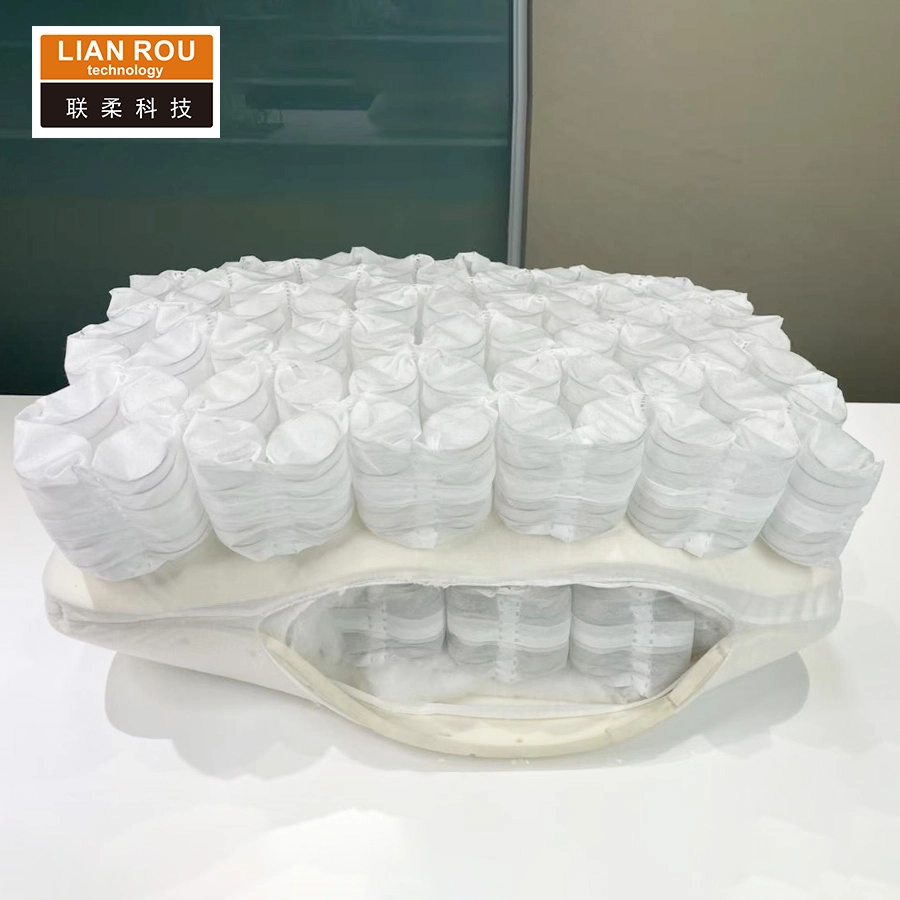
· Eco-Friendly Glue-Free Four-Leaf Clover Pocket Spring / Low-Profile Pocket Spring
The eco-friendly glue-free four-leaf clover pocket spring is a fully ultrasonic-welded encapsulated pocket spring with a compact arrangement where adjacent four springs form a four-leaf clover pattern. The low-profile four-leaf clover spring is relatively lower in height compared to mattress support springs, yet taller than bread springs, providing soft support that works with foam and thin latex layers to create zero-pressure sleep pillows. Additionally, the glue-free process eliminates VOC emissions associated with traditional adhesive bonding, meeting the access requirements for hotel, export, and environmentally certified products. Suitable for thin pillows, children's pillows, travel pillows, environmentally certified pillows, export pillows, and hotel pillows.
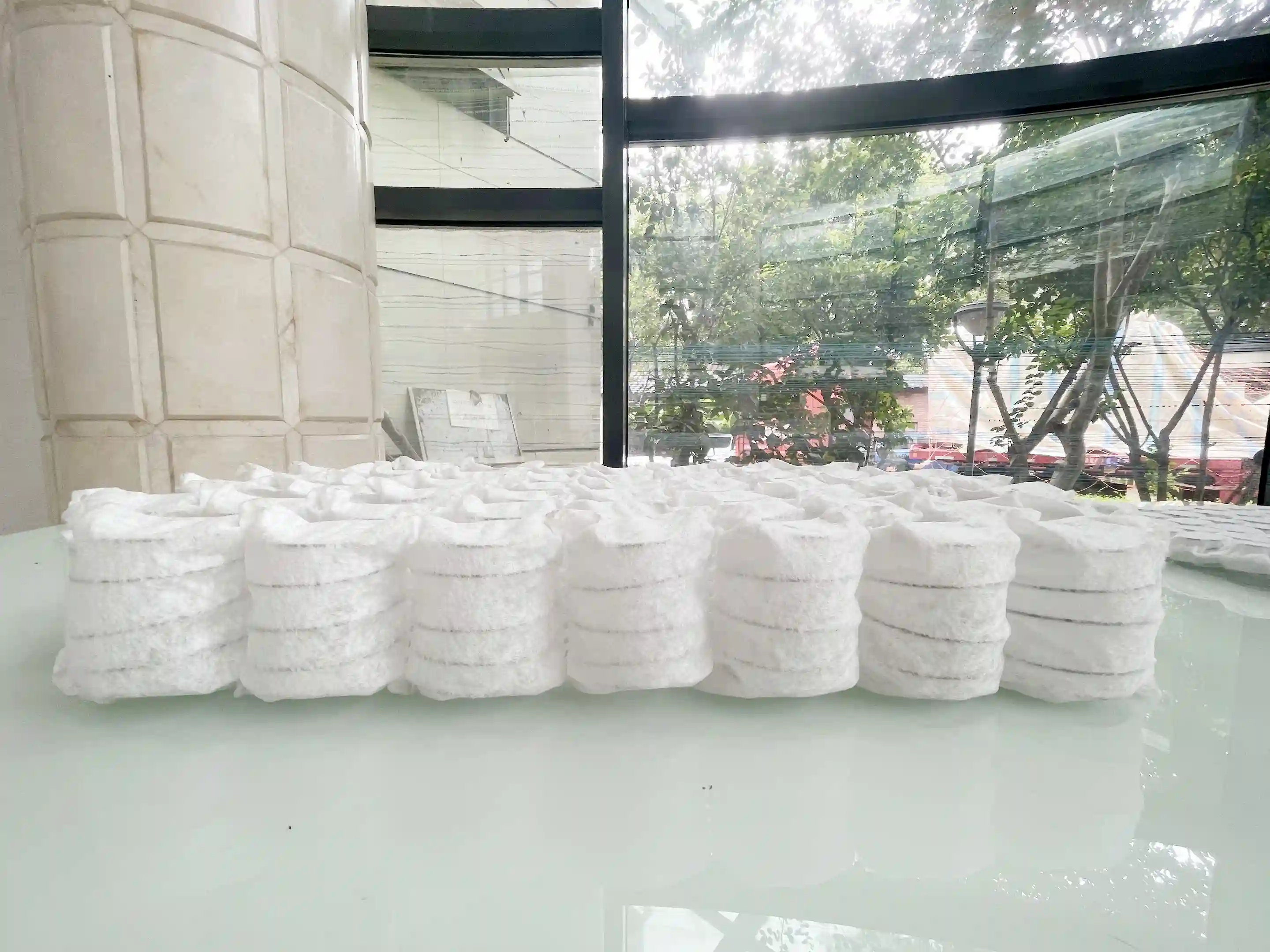
· Supermicro Spring
Supermicro springs are miniature pocket springs with extremely small outer diameter and fine wire gauge, offering significantly higher density and firmness per unit area than conventional products. Their fine support points enable more precise response to localized pressure differences across the head region, making them particularly suitable for ergonomic pillows, cervical support pillows, dedicated side-sleeping pillows, and premium custom pillows.
The core equipment for producing pillow-specific pocket springs is a miniature pocket spring production machine. Unlike mattress spring equipment, these machines are specifically designed to produce springs with smaller outer diameters and lower heights to meet the compact-structure requirements of pillows, seat cushions, tatami mats, and other thin-profile products.
Taking Lianrou Machinery's LR-PS-OVMS/OVMD pillow pocket spring production machine as an example, key features of this equipment include:

The equipment is applicable not only to pillows but also to seat cushion springs, sofa backrest springs, tatami mattress cores, and other product categories, covering broader applications and increasing equipment utilization.
A complete pillow pocket spring production line typically consists of two components:
The pillow core production process roughly follows: steel wire feeding → spring forming → pocketing and sealing → spring strip cutting → arranging and assembling to pillow core dimensions → composite bonding with foam, latex, and comfort layers → finished pillow core. When the pocket spring machine and assembly machine are connected in series, a continuous production line is formed, significantly improving batch consistency and efficiency.
Furthermore, for factories emphasizing environmental certification or export markets, glue-free ultrasonic welding assembly systems are available, which use high-frequency vibration to fuse non-woven fabric fibers without hot-melt adhesives, eliminating VOC concerns and producing glue-free pocket spring cores.
Supermicro springs, by reducing spring diameter, increase support contact points per unit area. Introducing this technology into pillow cores enables higher-precision support density in the head and neck regions.
For example, cervical support pillows can increase spring density in the neck zone while maintaining relatively softer springs in the head zone, creating a composite structure with differentiated zonal stiffness.
The future pocket spring pillow will no longer be merely a "pillow + spring" combination, but may evolve into: high-density micro-springs + zoned stiffness design + foam/memory foam/latex + ergonomic contouring.
If "one mattress per person" customizes mattresses based on body pressure distribution data, then "one pillow per person" further extends personalization to the head and neck region.
Pressure sensors can collect force data from the head, neck, and shoulders. Combined with sleep posture, shoulder width, height, and other parameters, this data enables back-calculation of pillow height, zonal stiffness, and spring distribution schemes. These are then realized through combinations of pocket springs, foam, and latex in various specifications.
This ultimately creates: body mapping data → mattress firmness profiling → pillow height and stiffness calculation → spring specification selection → personalized sleep system.
Compared with standardized product sales, this model offers significantly greater value in product depth and customer engagement.
When introducing pocket spring pillows, systematic evaluation is recommended across the following dimensions:
The value of pocket spring pillows to pillow manufacturers lies not in simply inserting springs into a pillow core, but in reconstructing the pillow's internal mechanical structure through independent elastic support + multi-layer material composite + ergonomic zoning.
This approach effectively addresses four persistent pain points of traditional pillows: insufficient support, collapse deformation, limited breathability, and product homogenization.
More importantly, this technology forms a natural synergy with mattress manufacturing:
This enables manufacturers to evolve from traditional filled products toward premium ergonomic sleep system suppliers.
For equipment or core material buyers, the core decision question is not "Is the pocket spring pillow a new concept?" but rather:
Can it support your factory's mass production of high-value-added premium pillow product lines that feature clear technological differentiation, flexible customization, and sustainable iteration?
Q1: What is a pocket spring pillow?
A pocket spring pillow uses independent pocket springs as the internal support core, combined with comfort layers such as foam, latex, and memory foam to provide elastic head and neck support.
Q2: Is it suitable for side sleepers?
Yes. By adjusting spring height, density, and stiffness, dedicated models can be developed to match side-sleeping postures.
Q3: Is it better than a memory foam pillow?
The two follow different design philosophies. Memory foam emphasizes static enveloping; pocket springs emphasize dynamic elastic response. Premium products typically combine both in a hybrid construction.
Q4: Is it prone to collapse?
Durability depends on wire material, spring design, encapsulation quality, and composite layer construction. Suppliers should be required to provide actual fatigue test data, not just marketing specifications.
Q5: Can factories produce their own pocket springs?
Yes. In-house production enables full control over spring specifications, suitable for factories with stable orders and OEM requirements.
Q6: Can supermicro springs be used?
Yes. Micro-springs increase support density within limited space, suitable for high-precision ergonomic pillow development.
Q7: Can different firmness levels be achieved?
Yes. Combinations of wire gauge, coil count, spring height, density, and comfort layer materials enable multiple firmness options ranging from soft to medium to firm.
Q8: What are the key equipment procurement considerations?
Priority should be given to small-format spring production capability, wire gauge/height compatibility range, encapsulation quality, automation level, and non-standard development support.
Q9: Can it be paired with a pocket spring mattress?
Yes. Both share the same elastic support logic, enabling a unified sleep system solution.
Q10: Does it have long-term market potential?
Yes, with clear premium product development potential, particularly in side-sleeping, ergonomic, hotel, and personalized customization segments. The core barrier to entry lies in the synergistic design capability of elastic support structures and composite materials.


TOP
