A full set of intelligent mattress machinery industry brands
Mattress machines are exported to 150+ countries
Date:2026-08-28
For side sleepers, a truly top-of-the-line mattress is not simply a soft mattress. It needs to balance pressure relief, adaptive support, spinal alignment, motion isolation, breathability, edge stability, and long-term durability. For mattress manufacturers, furniture manufacturers, sofa factories, and pillow factories, one of the most promising constructions is a hybrid system combining a zoned Pocket Spring or Pocket Coil core with adaptive Foam, Latex, Nano Coil, or Micro Spring comfort layers. Research on mattress firmness generally supports medium to medium-firm constructions for overall comfort and spinal alignment, while newer biomechanical research suggests that pressure distribution varies by body region and sleeping posture. This makes zoning and adaptive support particularly relevant to premium side-sleeper mattress development. From a Mattress perspective, the real question is therefore not “Which mattress is the softest?” but rather: How can a manufacturer engineer a mattress that relieves shoulder and hip pressure while maintaining stable support for the waist, pelvis, and spine?
Side sleeping creates a different pressure pattern from back or stomach sleeping. The shoulder and hip usually extend farther into the mattress because they are prominent parts of the body, while the waist area may have less direct contact with the mattress surface. If the mattress is too firm, the shoulder and hip may not sink enough, creating concentrated pressure. If it is too soft, the pelvis may sink excessively and the body can lose stable support.
Therefore, premium side-sleeper mattress design should not be defined by softness alone. It should create a controlled compression pathway in which the upper comfort layers provide pressure relief, the transition layer distributes load progressively, and the support core provides deeper resistance.
For Mattress manufacturers, this can be summarized as:
Premium Side Sleeper Mattress = Pressure Relief + Adaptive Support + Spinal Alignment + Motion Isolation + Breathability + Durability.
A premium product may therefore combine breathable fabric, Foam or Latex, Nano Coil or Micro Spring, Zoned Pocket Spring, and reinforced edge support. The exact combination should be validated according to the target market, body-weight range, mattress thickness, firmness target, and production cost.
One of the most common mistakes in mattress marketing is assuming that every side sleeper needs the softest possible mattress. In reality, the body needs both surface compliance and deep support.
A softer comfort layer can allow the shoulder and hip to sink into the mattress, reducing concentrated pressure. However, if the entire mattress has low resistance, the pelvis can sink too deeply. Conversely, a very firm mattress may provide strong resistance but fail to accommodate the body's natural curves.
A systematic review of mattress designs found evidence supporting medium-firm mattresses for comfort, sleep quality, and spinal alignment, although the ideal firmness can vary according to the individual. Other research on lateral sleeping has shown that mattress characteristics can influence spinal alignment and that body characteristics should be considered when designing support.
For manufacturers, this means that “soft,” “medium,” and “firm” should be treated as product-development parameters rather than absolute medical recommendations.
A premium mattress is usually better understood as a multi-layer support system rather than a single material.
The upper comfort layer should provide initial pressure relief. This layer may use memory-type Foam, high-resilience Foam, Latex, or a combination of materials. The transition layer then controls how the body moves from the soft surface into the firmer support core. This layer can use high-resilience Foam, Micro Spring, or Nano Coil.
The support core provides deeper structural support. For premium side-sleeper products, Zoned Pocket Spring is particularly useful because different zones can be designed with different spring specifications.
A representative construction may therefore look like:
Breathable Cover → Adaptive Comfort Layer → Nano/Micro Spring Transition Layer → Zoned Pocket Spring Core → Reinforced Edge Support
This is not a universal formula. It is a product-development framework that allows manufacturers to adjust the response of different layers.
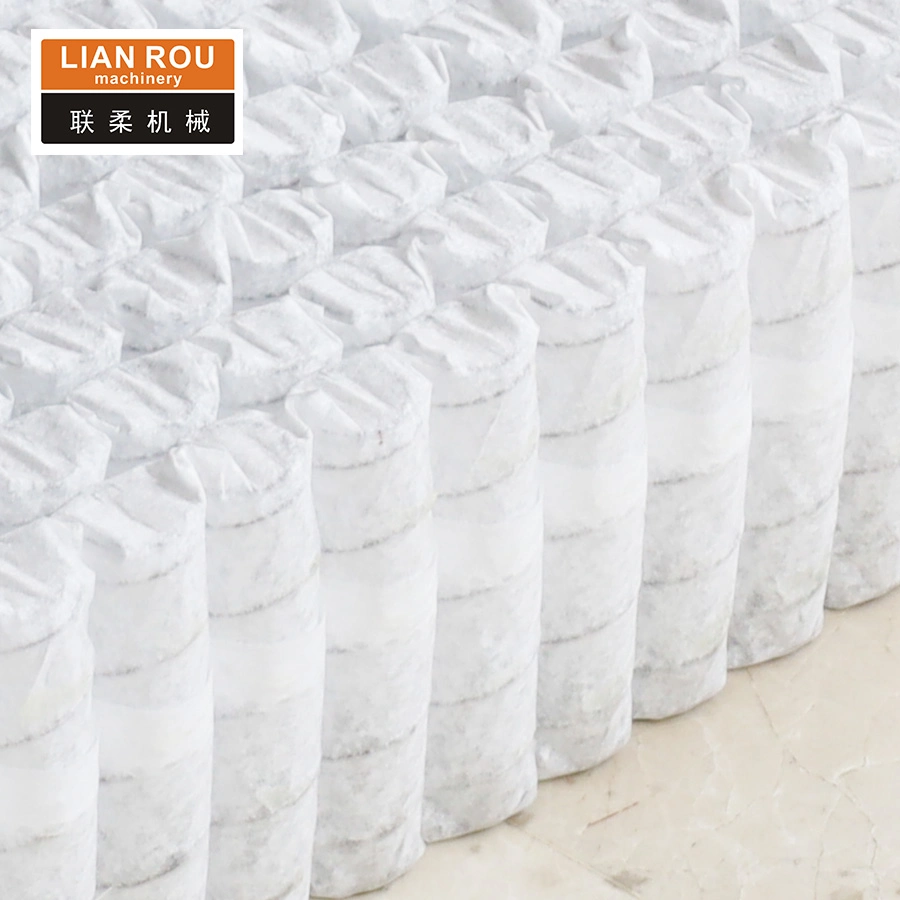
A Pocket Spring system consists of individual coils enclosed in fabric pockets. Unlike conventional interconnected spring structures, individual coils can respond more independently to localized loads.
This makes Pocket Spring valuable for premium side-sleeper mattresses because the shoulder, waist, hip, and leg regions do not necessarily require identical support.
For Pocket Spring buyers, however, spring count alone should never be used as the definition of quality. Important specifications include:
Wire diameter, coil diameter, spring height, number of turns, spring density, pre-compression, zoning, fabric construction, unit height, and edge reinforcement.
Two mattress cores can have the same number of springs but deliver different performance because their wire diameter, coil geometry, compression behavior, and comfort layers are different.
A professional procurement process should therefore evaluate the complete Pocket Spring specification rather than purchasing based on a “high spring count” marketing claim.
There is no universal spring count that automatically makes a mattress premium.
Increasing spring density can create more individual support points, but it also changes steel consumption, production speed, fabric requirements, mattress weight, and cost. More springs are only valuable when their geometry and performance are appropriate for the intended product.
For mattress manufacturers, the better question is:
How many effective support points are needed for this mattress design?
Spring density should be considered together with wire diameter, spring height, coil diameter, pre-compression, zoning, comfort-layer thickness, and target user weight.
This is especially important for premium side-sleeper mattresses because the manufacturer may want more localized response rather than simply more springs.
Yes. One of the most interesting directions for high-end mattress development is to increase the density of independent support points.
A conventional Pocket Spring already turns a mattress into a network of independent spring units. Supermicro Pocket Spring Units take this concept further by using smaller spring geometry and much denser spring arrangements.
In LianRou's Supermicro Pocket Spring solution, the mini spring waist diameter can be as small as approximately 30 mm, with commonly used wire diameters of 1.0 mm, 1.1 mm, and 1.2 mm. Depending on mattress size and product design, a mattress can contain approximately 3,000–4,000 mini springs.
The engineering idea is straightforward: every individual spring becomes a potential support point. When thousands of small springs are arranged in a dense matrix, the mattress can create a much finer support network across the sleeping surface.
This does not mean that “more springs automatically means better quality.” Rather, the value comes from combining high spring density with appropriate spring geometry, compression behavior, comfort layers, and zoning.
For premium manufacturers, this technology can be used to develop high-density support mattresses, premium mattresses, supportive mattresses, and orthopedic-style mattress products.
The key advantage of Supermicro Pocket Spring is the increased density of independent support points.
Imagine a mattress surface supported by thousands of small spring units rather than a smaller number of larger springs. The resulting structure resembles a dense elastic matrix. When a person's shoulder, waist, hip, or leg presses into the mattress, many nearby spring units can participate in the load response.
For high-end product development, this creates opportunities for more precise local support.
The commonly used 1.0 mm, 1.1 mm, and 1.2 mm wire diameters also give manufacturers room to tune the response of the spring system. Spring height, waist diameter, number of turns, wire diameter, and spring density can all influence the final feel.
A mattress containing approximately 3,000–4,000 mini springs can therefore be positioned as a high-density support product rather than simply another “high spring count mattress.”
For manufacturers targeting premium spinal-support concepts, high-density comfort systems, or advanced hybrid mattresses, Supermicro Pocket Spring provides another engineering route beyond conventional Pocket Coil construction.
If Supermicro Pocket Spring focuses on increasing the number of support points, a Curved Double-Layer Pocket Spring system focuses on making those support points behave differently according to body position and compression depth.
Traditional spring layers are often relatively planar. Even when two or more spring layers are stacked, they may still use similar spring heights and similar support characteristics throughout the mattress. This creates a relatively uniform support structure.
Human anatomy is not uniform.
The shoulder, back, waist, hip, and legs have different weights, curves, and contact pressures. A premium mattress can therefore benefit from a structure that changes progressively according to body region.
A Curved Double-Layer Pocket Spring system uses two spring layers with different heights, stiffness characteristics, and geometric parameters. The upper layer is designed primarily for comfort and contour adaptation, while the lower layer provides deeper structural support.
The result is a progressive support curve rather than a flat support response.

The core concept is to use different spring heights and coil characteristics in the upper and lower layers.
Under otherwise comparable conditions, spring height, number of turns, active wire length, and wire diameter influence the compression behavior of a spring. Manufacturers can therefore use different spring specifications to create different responses across the mattress.
For example, a taller spring with more turns and a longer active wire length can be designed for greater compliance and contouring, while a shorter spring with fewer turns can provide stronger deep support.
In a heavier hip region, the upper layer can use a taller and softer spring. This allows the body to enter the comfort layer more naturally and creates greater contouring. As compression increases, the shorter lower spring becomes increasingly important and provides deeper resistance.
In a lighter leg region, a taller spring can be used to create a softer response and reduce unnecessary firmness.
This creates a progressive support sequence:
Initial Contact → Surface Comfort → Progressive Compression → Deep Support
For side sleepers, this concept is particularly valuable because the shoulder and hip need room to compress while the waist and deeper body structure still require stable support.
Yes. One of the most interesting applications is individualized mattress production based on pressure data.
Instead of producing only three standardized products—Soft, Medium, and Firm—a manufacturer can collect pressure-distribution information from an individual and convert it into a customized support profile.
A pressure-mapping system can measure the relative loading of the shoulder, back, waist, hip, thigh, and leg regions. The resulting data can then be converted into a personalized zoning curve.
For example, if the hip area produces substantially higher pressure than the shoulder area, the manufacturer can design stronger deep support in the hip region while preserving a more compliant upper layer. If the shoulder area requires greater pressure accommodation, the upper spring layer can be adjusted accordingly.
The production concept can be expressed as:
Pressure Mapping → Personal Pressure Data → Zoning Curve → Spring Specification → Double-Layer Pocket Spring Production → Personalized Mattress Core
With the appropriate production equipment, this approach can turn individual pressure data into a customized Pocket Spring unit.
The goal is not to claim that a mattress can medically correct a spinal disease. The goal is to create a more precisely matched support structure that helps the sleeper maintain a comfortable and natural body position.
These two technologies solve different engineering problems.
Supermicro Pocket Spring focuses primarily on support-point density. With mini spring waist diameters down to approximately 30 mm, commonly used wire diameters of 1.0–1.2 mm, and approximately 3,000–4,000 springs in a mattress depending on the design, it can create a dense matrix of individual support points.
Curved Double-Layer Pocket Spring focuses primarily on support differentiation. Instead of simply increasing the number of springs, it changes spring height, turns, and support characteristics between regions and between upper and lower layers.
Therefore:
Supermicro = More Dense Support Points
Curved Double Layer = More Differentiated Support Response
A premium mattress manufacturer can even use both concepts in different product families: one product can emphasize high-density support, while another can emphasize personalized zoning and progressive support.
Foam, Latex, and Pocket Spring should not necessarily be viewed as competing materials.
They can perform different functions within the same mattress.
Foam can provide contouring and pressure relief. High-resilience Foam can also create a faster, more responsive feel. When used as a transition material, Foam can control how the body moves into the spring core.
Latex provides resilient support and fast recovery. It can be used as a comfort layer above Pocket Spring when a manufacturer wants a more buoyant and responsive feel.
Pocket Spring provides deeper structural support and localized response.
Nano Coil or Micro Spring can be placed between the comfort material and the main support core to create a more progressive transition.
A premium Hybrid Mattress can therefore combine:
Latex/Foam + Nano Coil/Micro Spring + Zoned Pocket Spring
This layered approach gives manufacturers much more freedom than choosing one material and expecting it to solve every performance requirement.
For professional procurement, the term “Memory Foam” or “High-Density Foam” is not enough.
Manufacturers should ask for the Foam density, firmness, ILD/IFD where applicable, resilience, compression set, fatigue performance, aging performance, thickness tolerance, and batch consistency.
If Foam is used as the comfort layer, it needs to provide sufficient compliance without losing too much thickness after repeated compression.
If Foam is used as a transition or support layer, it needs stronger load-bearing characteristics.
This is why Pocket Spring buyers should test Foam as part of the complete mattress structure rather than judging it as an isolated sample.
The interaction between Foam and Pocket Spring is particularly important. A strong spring core can still feel unstable if the comfort layer collapses too easily, while a very firm Foam layer can prevent the spring system from delivering the intended pressure-relief characteristics.
Latex can be particularly useful when the product needs a combination of pressure adaptation, resilience, and fast recovery.
Compared with slower-response Foam, Latex generally provides a more elastic feel. This can be attractive to consumers who want contouring without a deep “stuck-in-the-bed” sensation.
For mattress manufacturers, Latex can be used above Pocket Spring as part of a Hybrid Mattress construction. It can also be combined with Nano Coil or Micro Spring to create a more responsive comfort system.
However, procurement should distinguish between different Latex formulations and specifications. Buyers should verify Latex type, density, firmness, thickness, manufacturing consistency, and long-term compression behavior.
The product name “Latex Mattress” alone does not provide enough technical information for professional purchasing.
The goal of zoning is not to create as many zones as possible. The goal is to create meaningful differences in support where the body requires them.
A three-zone, five-zone, seven-zone, or more customized system may be appropriate depending on the product concept.
A side-sleeper mattress may, for example, use:
Shoulder Zone: Greater compliance to accommodate shoulder compression.
Waist Zone: More controlled support to reduce excessive sinking.
Hip Zone: Stronger deep support where body weight is concentrated.
Leg Zone: Moderate or softer support depending on the target feel.
Recent research into region-specific mattress pressure suggests that body-region pressure and posture should be considered when evaluating mattress comfort, which supports the broader engineering rationale for zoning and adaptive support.
For manufacturers, a zone should therefore have a measurable reason for existing rather than being added purely as a marketing label.
The future of premium mattress manufacturing may move from standardized comfort levels toward data-driven personalization.
The basic workflow is relatively clear:
First, pressure sensors collect the individual's pressure distribution while lying on a test surface. The system identifies relative pressure across different body regions. Second, software converts the pressure data into a personalized zoning curve. Third, the curve is translated into spring specifications such as height, wire diameter, number of turns, and support level. Finally, a Double-Layer Curved Pocket Spring machine produces the corresponding mattress core.
This approach creates a bridge between sleep data and manufacturing data.
Instead of telling a customer to choose Soft, Medium, or Firm, a premium brand can potentially offer a more sophisticated experience:
Scan → Analyze → Design → Manufacture → Deliver
For mattress brands, this creates a powerful product-differentiation opportunity. However, each customized configuration still needs appropriate validation for comfort, durability, dimensional stability, and production consistency.
A complete sleep system should not stop at the mattress. For side sleepers, the pillow and mattress should be designed together because the mattress determines how deeply the shoulder and torso sink while the pillow determines how the head and neck are supported.
The design objective should be to help maintain a natural physiological curve from the cervical region through the rest of the spine. If the mattress is very soft and the shoulder sinks deeply, the required pillow height may differ from that required on a firmer mattress. If the pillow is too low, the head can tilt toward the mattress; if it is too high, the neck can be pushed upward.
This creates an important opportunity for pillow manufacturers.
A Pocket Spring Pillow can use small independent pocketed springs to create a dense, flexible support structure. Instead of relying only on Foam, Latex, fiber filling, or other soft materials, the pillow can contain numerous individual spring units that respond locally to the pressure of the head and neck.
The concept is technically similar to a Pocket Spring Mattress: many independent support points create a more adaptive support surface.
For Mattress manufacturers, this opens the door to a complete product system:
Side Sleeper Mattress + Pocket Spring Pillow
or
Zoned Pocket Spring Mattress + High-Support Pocket Spring Pillow
The opportunity is particularly interesting for premium mattress brands, hotels, bedding manufacturers, and pillow factories looking for differentiated OEM/ODM products.
The growth of sleeper sofas, sofa beds, convertible furniture, and multifunctional furniture has made sleep performance increasingly important for furniture manufacturers.
Traditional sofa cushions often prioritize sitting comfort. However, when the same furniture is used for sleeping, the support requirements change dramatically.
A compact Pocket Spring system, high-resilience Foam, Micro Spring, or a hybrid construction can provide more structured support within a limited thickness.
For side sleepers, this is especially important because the shoulder and hip need controlled pressure accommodation while the body still needs deep support.
Sofa manufacturers should therefore evaluate:
Folding radius + Mattress thickness + Spring recovery + Frame compatibility + Compression durability + Sleeping comfort
A sofa bed Mattress cannot simply be treated as a thinner conventional mattress. Its spring system and comfort layers must work within the mechanical constraints of the furniture.
Pocket Spring and Box Spring are not interchangeable terms.
Pocket Spring normally refers to individual coils enclosed in fabric pockets and used as a mattress support core.
Box Spring generally refers to a foundation or support base beneath a mattress, although terminology can vary by market.
This distinction matters for both product development and SEO. A buyer searching for a “Box Spring for side sleepers” may actually be looking for a foundation compatible with a mattress, while a buyer searching for a “Pocket Spring Mattress” is usually referring to the internal support core.
Mattress manufacturers should therefore maintain clear product definitions when developing technical content and product catalogs.
A professional procurement process should evaluate the complete system rather than one specification.
For Pocket Spring, buyers should verify wire diameter, spring height, coil diameter, turns, density, pre-compression, zoning, fabric construction, unit dimensions, production tolerance, and edge-support strategy.
For Foam, buyers should verify density, firmness, thickness, resilience, compression set, fatigue performance, and batch consistency.
For Latex, buyers should verify the formulation, density, firmness, thickness, resilience, and durability.
For finished mattresses, buyers should test dimensions, height, firmness, pressure distribution, edge stability, recovery, and long-term durability.
The supplier should also demonstrate whether the same specification can be reproduced consistently in mass production.
This last point is critical.
A perfect prototype is not enough. A Mattress supplier must be able to manufacture thousands of units with stable spring height, spring spacing, welding quality, fabric tension, and mattress dimensions.
Premium mattress development should be connected to production machinery from the beginning.
A factory producing standard Pocket Spring mattresses may require a Pocket Spring Machine and Pocket Spring Assembly Machine. A factory developing high-density Supermicro products needs machinery capable of producing smaller spring structures at the required density and consistency.
A manufacturer developing personalized Curved Double-Layer Pocket Spring units needs equipment capable of handling different spring specifications, heights, turns, and zoning structures.
Additional equipment may include mattress quilting systems, tape-edge sewing machines, compression machines, roll-packing systems, vacuum packaging, and other mattress automation equipment.
The key procurement question should therefore be:
Can this production line manufacture the mattress specifications required by my product strategy?
Production speed is important, but flexibility, consistency, customization capability, automation, maintenance, and after-sales support can be equally important for a premium mattress factory.
LianRou Machinery has more than 28 years of experience in mattress machinery and Pocket Spring technology, with production solutions covering Pocket Spring Machines, Pocket Spring Assembly Machines, mattress compression, roll packing, and specialized spring structures.
For Mattress customers, the value of this type of supplier is not simply access to a machine. The more important value is the ability to connect product architecture with manufacturing capability.
For example, a factory developing a standard premium side-sleeper mattress may use a Zoned Pocket Spring core combined with Foam or Latex.
A factory targeting high-density support can develop a Supermicro Pocket Spring product using approximately 3,000–4,000 mini springs depending on mattress design.
A factory targeting personalization can explore Curved Double-Layer Pocket Spring technology and pressure-data-driven zoning.
A factory producing multifunctional furniture can investigate compact Pocket Spring solutions for Sofa Beds and Sleeper Sofas.
This creates a complete development chain:
Mattress Concept → Spring Structure → Machinery → Assembly → Compression → Packaging → Finished Product
For manufacturers, this approach is often more valuable than simply purchasing a generic spring machine.
The validation process should begin before the first large production order.
First, the manufacturer should define the target user profile, including body-weight range, sleeping position, mattress thickness, target firmness, retail price, and market requirements.
Second, the spring system should be tested for height, force response, compression behavior, dimensional consistency, and welding quality.
Third, Foam or Latex should be tested for density, firmness, resilience, compression set, and aging performance.
Fourth, the finished mattress should be evaluated for pressure distribution, comfort, spinal-position compatibility, edge support, recovery, and durability.
Finally, the factory should conduct batch-to-batch consistency checks.
This is especially important for Supermicro and Curved Double-Layer Pocket Spring products because their performance depends on many small structural parameters. A small deviation in spring height, wire diameter, spring spacing, or zoning position can change the final response of the mattress.
Mattress complaints rarely come from only one material.
A mattress may initially feel comfortable but develop excessive compression because the comfort layer has insufficient durability. Another mattress may have a high-quality Pocket Spring core but feel uncomfortable because the Foam layer is too firm.
Edge collapse can also create complaints, especially when sleepers frequently use the perimeter of the mattress.
For Mattress manufacturers, after-sales analysis should therefore trace the complete product chain:
Raw Material → Spring Specification → Production Process → Layer Structure → Finished Mattress → User Profile → Usage Conditions
This allows the manufacturer to determine whether the problem comes from the spring unit, Foam, Latex, fabric, assembly process, mattress construction, or user-product mismatch.
A professional supplier should support this kind of technical troubleshooting rather than simply replacing individual components.
The first question should not be “What is your spring price?”
Instead, the buyer should ask:
What wire diameters can you produce?
Can you manufacture Zoned Pocket Spring units?
Can you manufacture high-density Supermicro Pocket Spring units?
Can you produce different spring heights and turns?
Can you manufacture Double-Layer or Curved Pocket Spring structures?
Can the spring density be customized?
What production tolerance can you guarantee?
Can you provide samples for durability and pressure testing?
What machinery and technical support are available?
These questions reveal whether the supplier is capable of supporting product development rather than simply selling a commodity spring unit.
There is no single “best material” for every side sleeper.
A high-end mattress should instead be engineered as a system.
A representative premium design may include:
Breathable Cover
A breathable knitted or technical fabric can improve surface comfort and moisture management.
Adaptive Comfort Layer
Foam or Latex can provide initial contouring and pressure adaptation.
Nano Coil or Micro Spring Transition Layer
A micro-spring layer can create a more responsive and progressive transition between comfort and support.
Zoned Pocket Spring Core
The main support core can use different spring specifications according to body region.
Supermicro Pocket Spring Option
For a high-density support product, thousands of mini springs can create a dense matrix of support points.
Curved Double-Layer Pocket Spring Option
For personalized products, different upper and lower spring specifications can create progressive support according to pressure distribution.
Reinforced Edge Support
A stable perimeter can increase usable sleeping space and reduce edge collapse.
This modular architecture allows a mattress brand to build multiple SKUs without redesigning the entire manufacturing system.
A top-of-the-line side-sleeper mattress is not simply a soft mattress. It should balance pressure relief and deep support while accommodating the shoulder, waist, hip, and leg regions.
Pocket Spring is one of the most versatile support technologies. Its independent spring structure allows manufacturers to develop motion isolation, localized response, and zoning.
Supermicro Pocket Spring increases support-point density. Mini spring waist diameters can reach approximately 30 mm, with commonly used wire diameters of 1.0, 1.1, and 1.2 mm. Depending on product size and design, approximately 3,000–4,000 mini springs can be used in one mattress.
Curved Double-Layer Pocket Spring increases support differentiation. Different spring heights, turns, and support characteristics can create a progressive support curve.
Pressure mapping can connect personalization with manufacturing. Individual pressure data can be converted into a customized zoning curve and then translated into spring specifications.
Pillow design should be coordinated with mattress design. Pocket Spring Pillow technology can extend the independent-support concept from the mattress to the head and neck.
Sofa manufacturers can use similar technology. Compact Pocket Spring, Micro Spring, and high-resilience Foam can improve sleeper-sofa performance.
B2B procurement should focus on performance specifications rather than marketing numbers. Spring count alone does not define quality.
The future of premium mattress manufacturing is increasingly about precise support rather than simply softer or firmer comfort.
No. Side sleepers need sufficient surface compliance for the shoulder and hip, but they also need stable deeper support. Research generally supports medium-firm constructions for overall comfort and spinal alignment, while individual body shape, weight, mattress construction, and pressure distribution can change the ideal feel.
Neither is universally better. Pocket Spring provides localized structural support and motion isolation, while Foam can provide contouring and pressure relief. A Hybrid Mattress combining Pocket Spring with Foam or Latex can provide a broader performance range.
There is no universal configuration. A practical approach is to create different support characteristics for the shoulder, waist, hip, and leg regions and validate the design through pressure mapping and durability testing.
Supermicro Pocket Spring can increase the density of independent support points. With smaller spring geometry and thousands of mini springs, it allows manufacturers to develop dense support structures. However, spring count should always be evaluated together with wire diameter, spring height, spring geometry, pre-compression, and overall mattress construction.
Its main advantage is progressive support. Different spring heights, turns, and support characteristics can be used in the upper and lower layers so that the mattress response changes with body region and compression depth.
Yes. Pressure-mapping data can be converted into a personalized zoning profile and then translated into spring specifications. This creates a possible production model for individualized mattress cores, provided the final design is validated for comfort, durability, and manufacturing consistency.
Latex can be suitable for side-sleeper mattresses when a manufacturer wants a combination of contouring, resilience, and fast recovery. Its performance depends on formulation, density, firmness, thickness, and overall mattress structure.
There is no single density suitable for every product. The appropriate specification depends on the Foam's role as a comfort, transition, or support layer. Density should be evaluated together with firmness, resilience, compression set, fatigue performance, and aging.
Yes. Compact Pocket Spring and Micro Spring systems can be used in sleeper sofas when the spring unit, thickness, folding mechanism, recovery, and frame structure are properly matched.
Yes. A Pocket Spring Pillow can use small independent pocketed springs to create a flexible support matrix for the head and neck. It can be developed as part of a coordinated Mattress + Pillow sleep system.
There is no universal number. A professional buyer should evaluate spring density together with wire diameter, spring height, coil diameter, turns, pre-compression, zoning, comfort-layer specifications, and durability.
Depending on the product strategy, a factory may require Pocket Spring Machines, Pocket Spring Assembly Machines, high-density spring production equipment, specialized double-layer spring machinery, quilting equipment, tape-edge machines, compression systems, roll-packing equipment, and packaging automation.
The scientific discussion in this article is based primarily on peer-reviewed research rather than mattress-brand marketing claims.
A systematic review published in the Journal of Chiropractic Medicine evaluated controlled trials concerning mattress designs and reported evidence supporting medium-firm mattresses for comfort, sleep quality, and spinal alignment.
A broader literature review also examined mattress type, sleep quality, and musculoskeletal outcomes and concluded that medium-firm mattresses generally have favorable evidence, while acknowledging that individual requirements vary.
Research examining spinal alignment during lateral sleeping has demonstrated that mattress characteristics can affect spinal alignment and that individual anthropometric characteristics are relevant to mattress support design.
More recent region- and posture-specific research has further explored pressure distribution across different body regions, reinforcing the importance of considering localized pressure rather than treating the body as a uniform load.
The question “What are the top-of-the-line mattresses for side sleepers?” has a much more sophisticated answer than “choose a soft memory-foam mattress.”
From a Mattress manufacturing perspective, a premium side-sleeper mattress is a carefully engineered system.
Foam or Latex can provide surface pressure adaptation.
Nano Coil or Micro Spring can create progressive comfort and transition.
Pocket Spring or Pocket Coil can provide independent deep support.
Supermicro Pocket Spring can increase the density of support points through thousands of mini springs.
Curved Double-Layer Pocket Spring can create progressive and differentiated support according to body region and compression depth.
Pressure mapping can take the concept further by connecting individual body-pressure data with customized mattress production.
And the same support philosophy can extend beyond mattresses into Pocket Spring Pillows, Sleeper Sofas, Sofa Beds, cushions, and other furniture products.
For mattress factories, furniture manufacturers, and pillow factories, the real opportunity is therefore not simply to manufacture another soft or firm mattress.
It is to build a more precisely engineered sleep-support system.
The future of premium sleep is not simply softer or firmer. It is more precisely supported.


TOP
